Special Offers
Still time to enjoy up to 20% off last minute departures
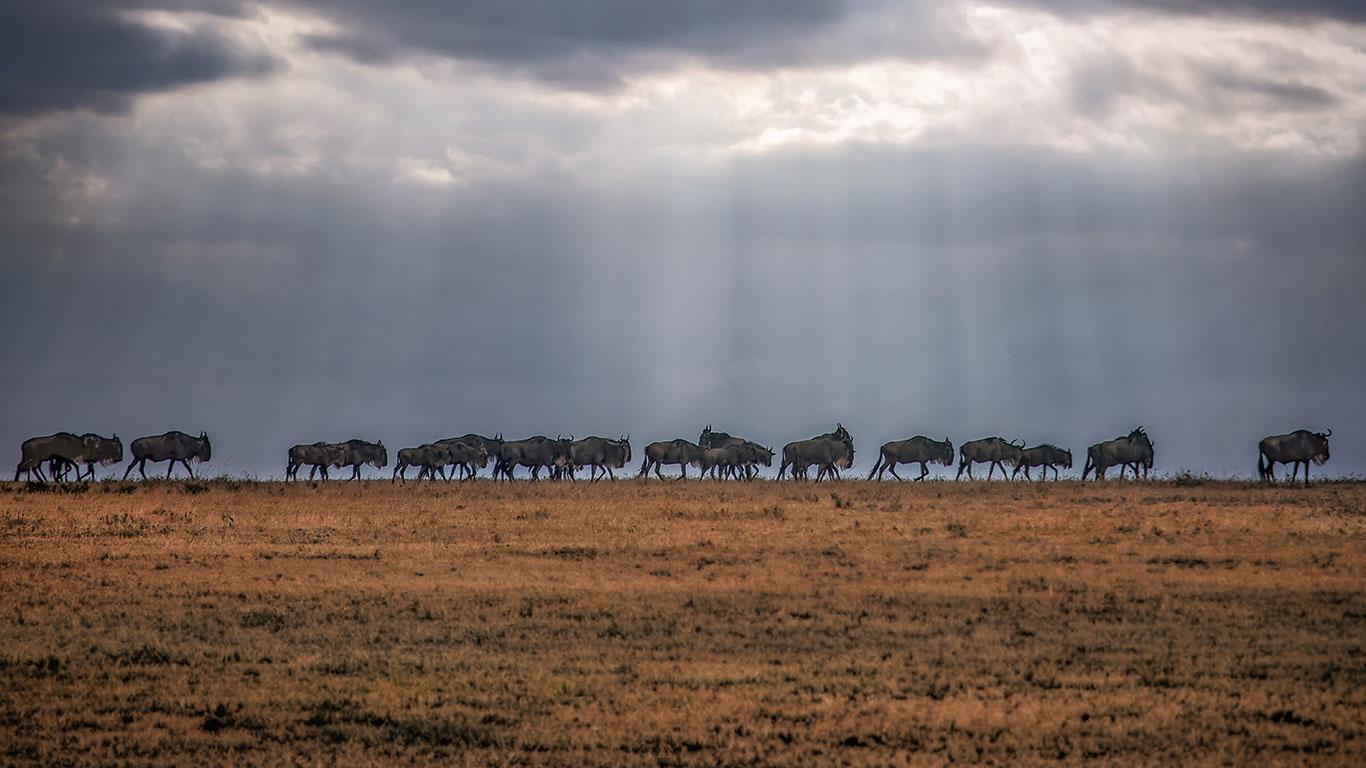
There is still time to take advantage of an incredible 20% off SkySafari departures before the end of May 2025. This limited travel period offer is applicable to the 10-day Kenya or Tanzania adventures, while our guests booking 8-day journeys to Kenya or Tanzania can take advantage of an 18% saving on their safari. For those seeking the complete East African experience, our comprehensive 13-day adventure combining both Kenya and Tanzania offers guests a 15% discount.
This offer is available for new bookings only and cannot be combined with other offers. A minimum of two people sharing accommodation is required. Subject to availability and standard terms and conditions apply.
Above & Beyond News
Tortilis Camp to replace Elsa’s Kopje on eight-day Kenya itinerary
Tortilis Camp in Amboseli National Park will temporarily feature on the itinerary whilst Elsa’s Kopje in Meru National Park is closed for a refurbishment. Guests will not be disappointed with Amboseli National Park, which is famous for an elephant population of over 1000, as well as lion, cheetah, hyena, and jackal, all dominated by the magnificent Kilimanjaro, the world’s highest free-standing mountain.
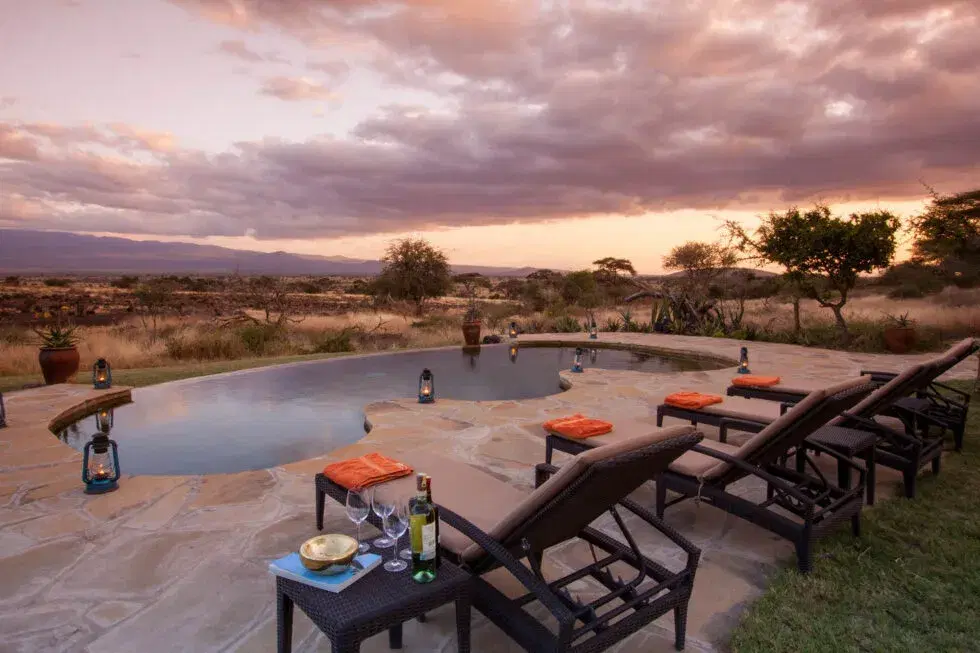
Tortilis Camp offers the best of both worlds, located in the peaceful Kitirua Wildlife Conservancy, with access to the wildlife rich, iconic landscape of Amboseli National Park. Game drives take place in both the Kitirua Wildlife Conservancy and the Amboseli National Park. However, the camp’s location in the private conservancy allows for fascinating bush walks, where guests can learn about the intricacies of the surrounding fragile eco-systems and literally walk in the footprints of elephants.
Air France resumes Paris-Tanzania flights
Air France has resumed operations to Tanzania after a 28-year hiatus, introducing three weekly flights from Paris-Charles de Gaulle Airport to Kilimanjaro International Airport with a stopover in Zanzibar. The route operates every Monday, Wednesday, and Saturday, offering additional travel options for SkySafari guests traveling through CDG.
Turkish Airlines to increase flight capacity to Tanzania from June 2025
Turkish Airlines will increase its flight routes to key destinations in Tanzania starting this summer. The Istanbul-Kilimanjaro-Zanzibar-Istanbul route will increase from 4 to 5 weekly flights from March 30, 2025, and further expand to daily service from June 13, 2025. Similarly, the Istanbul-Zanzibar-Kilimanjaro-Istanbul triangle routing (replacing the nonstop Istanbul-Zanzibar service) will operate 5 times weekly from March 30, 2025, increasing to daily service from June 9, 2025. Overall, Kilimanjaro will see its weekly frequencies double from 7 to 14 by June 2025, significantly enhancing connectivity for travellers to Tanzania.
Green Season Sky
Green Season offers SkySafari guests some wonderful game viewing opportunities and less people, all at a lower price point.
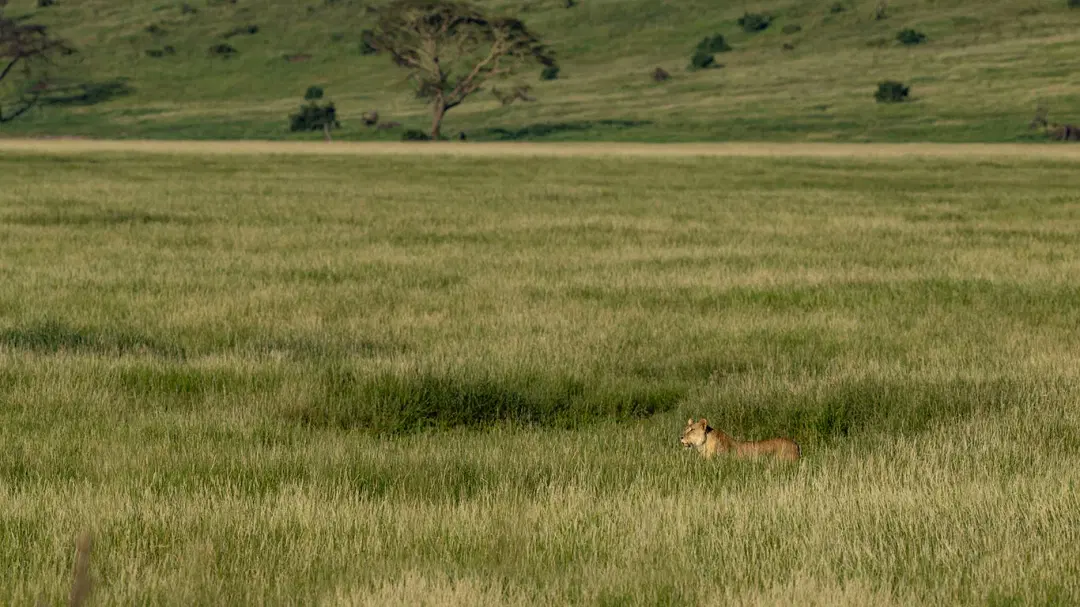
Disregarded by many, the green season is still a wonderful time of year to travel if you prefer a quieter experience at a more affordable price point. Many animals are giving birth to their offspring, so it is a great time of year to witness the first steps of the plain’s youngest inhabitants. The vegetation is lush which attracts a plethora of birdlife and their sweet song. It is also a dream time for photographers as the light can favour shots resulting in fantastic and sometimes dramatic images.
Conservation Partners
How SkySafari partners with Carbon Tanzania to support the Yaeda-Eyasi Landscape project
Thanks to the ongoing collaboration with Carbon Tanzania, SkySafari purchases certified carbon credits from the Yaeda-Eyasi Landscape Project to support the protection of 110,000 hectares of precious dryland forest in northern Tanzania, the ancestral homeland of the Hadza hunter-gatherers, who have lived in this region for 40,000 years, along with Datooga pastoralists.
This initiative came about when immigrant farmers, looking for new agricultural land, had seen the Hadza and Datooga forests as unused and over time they illegally encroached upon their rangelands, converting forests to cropland. This threatened the forests, biodiversity and the existence of the Hadza people with their ancient culture and traditions. Over a 50-year period the Hadza lost 90% of their ancestral rangelands to migrating pastoralists and agriculturalists conducting unsustainable farming practices.
Since 2011, Hadza communities partnered with Carbon Tanzania on a forest protection carbon project, later joined by 11 Datooga communities in 2021 and deforestation has decreased to almost zero. Carbon Tanzania generates forest-based carbon credits, which are purchased by SkySafari, that enable Tanzania’s Indigenous resource-owners to earn revenues from the protection of their natural resources. These verified emission reductions allow SkySafari to invest in a nature-based solution that serves the climate, Indigenous communities, wildlife, and contributes to delivering the SDGs.
SkySafari is proud to support Carbon Tanzania’s primary objective which remains clear: to protect these vital forests for indigenous people, wildlife, and the climate. By supporting local communities to be stewards of their land, they ensure a healthy future for generations to come.
Sky High Talks
Winfrida Ernest Mgongolwa of Carbon Tanzania highlights the tangible benefits of SkySafari’s support
We spoke with Winfrida Ernest Mgongolwa of Carbon Tanzania to learn more about how SkySafari's carbon credit purchases help protect communities.
How do carbon credit sales directly benefit the Hadza and Datoga communities, and what tangible impacts have you observed?
When SkySafari purchases carbon credits from the Yaeda-Eyasi Landscape Project, they're investing directly in the Hadza and Datooga communities. The revenue earned from the sale of certified carbon credits is paid directly to forest communities, allowing them to manage their own development needs. The communities receive their revenue in bi-annual payments when the villagers come together to determine how to share the revenue.
The 2023 Impact Report shows remarkable results: 1,382 primary school children, 222 secondary school children, and 18 university students gaining education access; 148 Village Game Scouts (including 17 women) safeguarding 110,500 hectares of ancestral forests; vital health centres being built; and local governance strengthened. For 15 students in Endesh Village, carbon revenue provides school fees, mattresses, food, supplies, uniforms, sanitary pads for girls and health insurance, making education possible for students who must board due to distance.
Without carbon revenue, school would be a challenge. Now, they have a safe place to live, study, and pursue their dreams. It's a simple story: carbon revenue opening doors for these students.
How do local communities participate in and benefit from forest protection efforts?
Because local communities are so effective at protecting their natural resources, Carbon Tanzania enters into equitable contracts with Indigenous peoples and local communities who develop their own land use plans. Communities protect their forests, and Carbon Tanzania provides technical assistance to generate carbon credits, which are sold on the voluntary carbon market. This ensures they have a legal basis on which they can benefit from carbon finance as well as helping international efforts to protect nature.
Recent reports tell us that recognising Indigenous land rights leads to lower deforestation rates, higher biodiversity conservation and higher carbon storage. In the Yaeda Valley and Eyasi region, our community partners hold CCROs, the Hadza became the first group of people in Tanzania to be issued a community Certificate of Customary Right of Occupation (CCRO). Essentially a ‘title’ for their land, it gave them ownership of the resources in their territory and legal enforcement against encroachment. Following this landmark achievement, the Datooga applied for and then received their own CCRO in 2016.
What makes the Yaeda-Eyasi Landscape carbon credit model unique compared to other conservation initiatives?
The Yaeda-Eyasi Landscape carbon credit model is unique in its holistic approach, effectively blending community-led conservation with rigorous scientific oversight. We are verified by Plan Vivo, which emphasises the importance of community benefits and ecosystem integrity. The 2019 Equator Prize underscores the project's success in empowering the Hadza and Datooga communities. Our commitment to accuracy is further demonstrated by our collaboration with leading forest carbon scientists to set our methodologies. Importantly, we’re not static; we embrace continuous improvement, ensuring our practices evolve with the latest climate science and standards.
Our funding model is a key differentiator. We utilise a market-based approach, relying on carbon credit sales rather than traditional grant funding. This supports the Hadza and Datooga communities, enabling them to directly benefit from their efforts in forest protection and maintain greater control over project operations and resulting benefits.
How does SkySafari's model of responsible tourism complement Carbon Tanzania's conservation efforts?
SkySafari's responsible tourism model directly supports Carbon Tanzania's conservation work through financial investment in our carbon credit projects. The carbon revenue that the local communities earn supports their efforts to protect their forests and improve their livelihoods, aligning perfectly with our shared goals of sustainability and community empowerment.
What unique insights do international travellers gain about conservation and community development through this partnership?
International travellers gain unique insights into how carbon finance can directly benefit local communities, providing them with the resources to protect their forests and improve their quality of life. They learn about the importance of and the achievements that are possible with community-led conservation, understanding the crucial role of Indigenous knowledge and local participation. This educational experience provides a deeper understanding of sustainable development and the power of responsible tourism to create lasting positive impacts.
How do you communicate the concept of carbon credits and community conservation to tourists?
We communicate the concept of carbon credits and community conservation to tourists through engaging storytelling and impactful visuals. We share the stories of the Hadza and Datooga communities, highlighting their deep connection to the land and their crucial role in protecting it. We use visual aids, such as infographics, photos, and short videos, to illustrate how carbon credits directly support these communities, funding education, healthcare, and forest protection. We aim to make the concept accessible and relatable, showing tourists the tangible impact of their support and how it contributes to both environmental and social well-being.
How is Carbon Tanzania working to ensure the long-term sustainability of both the forest ecosystem and the local communities?
Carbon Tanzania designs and implements projects that not only recognise the role of Indigenous people and local communities in conservation but integrally depend on their involvement. Indigenous people and local communities are often the most effective conservationists, with valuable traditional knowledge about their forests and landscapes that makes them the best stewards of nature. By fairly and respectfully rewarding these communities for their success in protecting and managing biodiversity, and preventing additional carbon emissions, we are making nature a truly sustainable economic choice. Instead of bearing the cost of conservation, communities are benefiting from a commitment to manage and conserve the ecosystem.
What are the biggest misconceptions about community-based carbon credit projects that you encounter?
One of the biggest misconceptions is that community-based carbon credit projects are simply about 'paying people to stop cutting trees.' In reality, they are about empowering communities to become active stewards of their own resources. There's also a misconception that all the money goes to external entities. In our projects, 61% of the revenue goes directly to the communities, allowing them to decide how to invest in their own development. Crucially, a common and damaging misconception is that these projects involve removing people from their own land. In our case, and in ethical community-based projects, we work to strengthen land rights, not undermine them. People often underestimate the sophistication and effectiveness of these projects in driving both environmental and social benefits.